
Why Smart Lockers Belong in Your Operations Strategy
Smart lockers are often evaluated like furniture or IT equipment. People look at unit cost, footprint, and how they fit into the space. That framing misses what actually matters. Smart lockers are not just something you install. They change how packages move through your organization from the moment they arrive to the moment they are picked up.
How Package Operations Actually Evolve
Most organizations did not design a package operation. They ended up with one over time. Mailrooms were originally built for letters. Front desks picked up package handling as an added responsibility. As delivery volume increased, processes formed along the way, often without much structure behind them.
When things started to feel strained, the response was usually reactive. Add a temporary storage area. Put a basic logging system in place. Ask staff to absorb more of the workload or extend coverage. Before long, package handling becomes a critical part of daily operations, but it was never intentionally built to handle that role.

What Happens When Lockers Are Treated Like Equipment
When smart lockers are evaluated as a physical purchase, the conversation tends to focus on the wrong things. Attention goes to price instead of process. ROI is measured against the cost of the lockers rather than the cost of the workflow they are replacing. And the bigger operational inefficiencies stay buried.
That is where things start to fall short. Locker systems get undersized. Staff and recipients do not fully adopt them. Manual handling does not go away, it just shifts around. And the results do not match expectations. The issue is not the lockers themselves. It is that the surrounding process never changed.
Why That Approach Falls Short
If lockers are dropped into an existing workflow without rethinking how things operate, the same problems continue to show up. Packages are still handled multiple times before they reach the locker. Staff are still pulled in to manage what should be routine activity. Labor demands stay relatively flat, even as volume grows.
In that environment, lockers become extra storage. They might look like an upgrade, but they do not actually solve the underlying problem. Instead of simplifying operations, they become another system for staff to manage.

What Changes When You Take a Strategic Approach
When smart lockers are part of a broader operational redesign, everything starts to work differently. Receiving becomes more consistent with a simple, standardized intake process. Storage is organized and secure instead of scattered across available space. Notifications happen automatically. Pickup shifts to self-service, on the recipient’s schedule, not yours.
And most importantly, staff are no longer involved in every step. The impact builds quickly.
- Labor is no longer tied directly to package volume
- Service levels stay consistent, even during spikes
- Front desk and mailroom teams can refocus on higher-value work
- Tracking and accountability improve across the board
- Operations can scale without adding complexity or cost at the same pace
At that point, lockers are no longer just a place to store packages. They become the system that moves them efficiently from delivery to pickup.
Why This Matters When You Are Evaluating Options
Organizations that see the most success with smart lockers approach the decision differently. They are not just asking what the lockers cost. They are asking how their current process works, where it breaks down, and what needs to change to support future growth.
That mindset shapes everything that follows. It affects how lockers are sized and placed, how they fit into existing workflows, and how teams adopt them over time. When lockers are treated as a simple purchase, you get storage. When they are treated as part of a larger operational strategy, you get a more efficient and scalable system.

Make the Right Decision from the Start
Evaluating smart lockers the right way requires a different lens. It is not just about the equipment. It is about how your operation runs today and how it needs to run moving forward.
Download the Smart Locker Buyer's Guide to:
- Identify gaps in your current workflow
- Define success beyond upfront cost
- Avoid common deployment mistakes
- Build a system that can scale with your organization
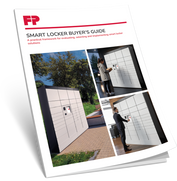
Download the Smart Lockers Buyer's Guide and take a more strategic approach to your decision.
FAQs
Learn more about FP Smart Lockers
Want to see how Smart Lockers can fit into your current processes to avoid break downs and support future growth?
Published at: 06/09/2026
Jamie Spell is the National Business Development Manager. He has been with FP Mailing Solutions since 2018, and working in the industry for over 10 years. When not working, Jamie enjoys traveling, golfing, and college sports.
Newsroom Posts from Jamie Spell

FP Trax and the Operational Challenges of Internal Delivery Tracking
Package management used to be relatively straightforward. Deliveries arrived at a central mailroom or front desk, were signed for, and employees...

Boost Revenue and Customer Satisfaction - Even After Hours
Quick Print - Order Pickup Solutions You deliver quality, We deliver convenience. Your customers count on you for fast and professional printing....
Why Smart Lockers Belong in Your Operations Strategy
Smart lockers are often evaluated like furniture or IT equipment. People look at unit cost, footprint, and how they fit into the space. That...